GPU depreciation and fair market value can swing 30-60% in a year. Residual value insurance puts an insured floor under that uncertainty, issued by an insurer supported by investment-grade reinsurance. The structure has been used in aircraft, ship, and heavy equipment financing for decades.
Just need GPU depreciation data? See our 2026 Outlook Report. Looking for coverage against fire, water, or theft on GPU hardware in a data center? That is GPU property insurance, which Matcha Specialty Insurance Services brokers separately.
This primer explains how residual value insurance solutions work and what to look for in a policy. To request terms for a specific project, discuss a transaction.
What is GPU residual value insurance?
Residual value insurance has been used in aircraft, vehicle, marine, and equipment financing for decades.
The American Compute program brings this tool to AI infrastructure. GPU residual value insurance (RVI) puts an insured floor under the resale value of datacenter equipment: GPU servers, networking gear, and storage. If scheduled equipment is sold in an eligible sale at a covered trigger date for less than the floor, the policy pays the shortfall, subject to its terms, limits, and exclusions.
It is built for the institutions that finance AI infrastructure: banks, equipment finance companies, private credit funds, ABS issuers, and lessors.
A fleet of H100 servers worth $10M at purchase could sell for $3M or $7M in three years. The variables include NVIDIA's product cycle, AI demand trends, export controls, and competition from AMD and custom silicon.
That uncertainty is what residual value insurance is designed to address. An insured floor gives an unpredictable asset a known minimum value at each covered trigger date, for eligible sales and subject to the policy terms.
| Tool | What it is | Key consideration |
|---|---|---|
| Residual value insurance | A policy issued by a rated insurer, supported by reinsurance. | Pays the shortfall below a floor agreed up front when an eligible sale at a covered trigger date closes below it, subject to the policy terms. The issuing insurer is responsible for covered claims. |
| Price-accuracy warranty | An AI valuation sold with a warranty on its accuracy. | You hold the provider’s warranty, not an insurance policy. What it pays depends on the warranty terms, and you carry counterparty risk on the provider. |
| Buyback guarantees | A guarantee from IT asset disposal firms. | Counterparty risk; only as strong as the firm behind it. |
| Residual value guarantees | A guarantee from IT asset disposal firms. | Counterparty risk; only as strong as the firm behind it. |
| Put options | A contract giving the right to sell at a set price. | Counterparty risk; expensive. |
| Credit default swaps | A credit derivative. | Expensive. Hard to qualify. |
| Residual value swaps | A bilateral over-the-counter derivative. | Expensive. |
Residual value insurance is an insurance policy, not an informal promise: a floor agreed up front, with the issuing insurer responsible for paying the shortfall when an eligible sale at a covered trigger date closes below it, subject to the policy terms.
What to look for in a policy
Not every product marketed as protection works the same way. Three questions separate a real policy from an informal promise.
- Counterparty. Is it an insurance policy issued by a rated insurer, or a warranty or guarantee from the provider itself? Under a policy, covered claims are the issuing insurer's obligation. Under a warranty or guarantee, what you can recover depends on its terms and on the provider's own balance sheet.
- What it actually pays. Which sales and trigger dates qualify, what limits apply, and whether coverage is capped or excluded in a market-wide downturn. Read the full wording, not a summary.
- Experience. Who prices the risk, and on what data? Pricing these policies takes deep knowledge of GPU depreciation curves, secondary-market dynamics, and refresh cycles.
Before relying on any policy, ask for the full policy wording; the issuing insurer's legal name, financial strength rating, and domicile, and whether it is admitted or nonadmitted in your state; an explanation of how reinsurance supports that insurer; and the triggers, limits, and exclusions that apply.
How lenders and lessors use it
Three use cases account for most of the deals we see. Each exhibit below toggles between the position you hold unaided and the position with a policy behind it. Whether a structure is available, and how it is accounted for, depends on the transaction, the accounting treatment, and the coverage.
Neocloud cash flow
Amortizing the full balance across the term puts the whole loan into the monthly payment. With an insured residual value floor, a lender may be willing to size a balloon with the floor in mind and amortize only the rest, which can lower the monthly payment. The balloon is retired from the hardware sale at term end; if an eligible sale closes below the insured floor, the policy pays the shortfall, subject to its terms.
Equity or FMV leasing
Where the hardware lands at the end of a fair market value lease is a range, not a number, and the lessor has to commit to a residual up front. Unaided, lessors tend to book conservatively. With an insured floor, a lessor may be able to support a higher booked residual, but whether it can, and whether that residual can still be written down, depends on the lease, the lessor's accounting treatment, and the coverage.
Credit enhancement
An insured floor can step down alongside the outstanding loan balance rather than sitting only at maturity. If a borrower defaults partway through the term, the policy responds only to an eligible sale at a covered trigger date, so how much of the balance it protects depends on the trigger dates, limits, and exclusions in the policy. Where the structure fits, that can make a lender more comfortable extending to a weaker credit.
A practical note for borrowers and operators: this coverage protects the party carrying the residual exposure, so start there. Confirm your lender or lessor actually wants the protection, then introduce them to Matcha Specialty Insurance Services, which places the coverage. Placements tend to move faster when the party the coverage protects is in the conversation from the start.
Why GPU values are hard to predict
NVIDIA releases new GPU architectures roughly every two years. Each generation delivers 2-3x the performance of the previous one, and previous-generation resale values typically drop 30-60% within 12-18 months of a new launch.[1]
No standardized pricing index exists for used datacenter GPUs (for the hardware, at least; hourly rental rates have several). Aircraft have ISTAT, which publishes monthly valuations for every airframe. Vehicles have Kelley Blue Book and Manheim auction data. GPUs have nothing equivalent. Price discovery depends on broker networks, direct negotiations, and whatever inventory is available at the time.[2]
Many industry players prefer it that way. NVIDIA and the OEMs benefit from the opacity, which helps them protect margins.
Demand shifts add another variable. The AI training boom drove GPU prices above list during 2023-2024.[3] Blackwell production is ramping into early 2026. Hopper resale values dropped in late 2025 as the market anticipated the shift, then rebounded as supply tightened and buyers moved to lock in available hardware.[1] Inference workloads, which favor different hardware than training, are growing faster. A fleet optimized for training may not command the same premium in an inference-first market two years out.
How a policy works
- The equipment owner provides the details: GPU model, server configuration, networking gear, and quantity. A Bill of Materials (BOM) is preferred.
- Matcha Specialty Insurance Services, within the underwriting authority the issuing insurer delegates, quotes an insured floor for each covered trigger date and a premium.
- Coverage takes effect once it is bound in writing and the premium, typically due upfront, is paid.
- When the owner decides to dispose of the equipment, at one of the trigger dates set in the policy, the hardware is sold on the open market. The insured floor for that trigger date applies to an eligible sale.
- If an eligible sale closes below the insured floor for that trigger date, the owner, or its lender where named on the policy, makes a claim, and the issuing insurer pays the covered shortfall, subject to the policy's terms, limits, and exclusions. If it clears above, the upside belongs to the owner.
| Term | Details |
|---|---|
| Equipment covered | IT equipment scheduled on the policy: GPU servers, networking, storage |
| GPU models | NVIDIA B300, B200, H200, H100 |
| Policy term | Up to 3 years |
| Disposal timing | Covered trigger dates set in the policy |
| Insured floor | Set per trigger date (typically higher in early years, lower in later years) |
| Sale window | 90 days from the trigger date, as set in the policy |
| Eligible sales | Defined in the policy (for example, good-faith sales only) |
| Limits and exclusions | Set out in the policy wording |
| Claims paid by | The issuing insurer, under the policy terms |
| Reinsurance | Investment-grade reinsurance supports the issuing insurer; it does not by itself give policyholders a claim against the reinsurers |
The insurer never takes possession of the hardware. The owner sells it directly or through a reseller, and the policy defines which sales are eligible; for example, only good-faith sales qualify.
Equipment must carry an OEM warranty that runs through the policy term. This protects both sides: hardware that degrades from poor maintenance is a separate issue from market depreciation.
What equipment is covered
The policy covers the IT equipment inside the cluster, not just the GPUs. A typical AI cluster includes GPU servers, high-speed networking switches (InfiniBand or Ethernet), and storage arrays. All of it depreciates on a technology cycle, carries secondary-market value, and can be scheduled on a single policy.
Facility infrastructure is excluded: backup batteries, diesel generators, cooling systems, and building improvements. These assets depreciate on a different curve. Coverage focuses on the technology that carries the most residual-value uncertainty.

Who uses GPU insurance
Lenders, lessors, and investors
An insured residual value floor can make uncertain collateral more predictable. A lender can weigh the insured floor, subject to the policy terms, alongside its own view of the collateral instead of relying on an operator's estimate, and may structure a balloon with that floor in mind.
Over $20 billion in GPU-backed debt exists as of early 2026.[4] CoreWeave, Lambda, Nscale, Crusoe, and xAI have all used GPUs as collateral for debt facilities ranging from $500M to $7.5B.[5][6][7][8] As this market grows, lenders need tools to manage residual value risk.
AI cluster operators
An insured resale floor helps you plan tech refresh cycles: an eligible sale at a covered trigger date has a known minimum, subject to the policy terms, so you can plan the reinvestment in next-gen hardware. It can also address a common financing objection, residual value uncertainty, though whether and how fast a lender approves a deal remains the lender's decision.
Channel partners
Procurement specialists, VARs, financing groups, and advisors refer clients whose financing has stalled on residual value. An insured resale floor can help address a lender's residual value concerns; the financing decision stays with the lender.
Residual value insurance across industries
Residual value insurance is not new. The same structure now applied to GPU servers has protected asset values across aviation, automotive, heavy equipment, and marine financing for decades.
Aviation
Residual value insurance has supported commercial aircraft financing since the late 1990s. For a premium, the insurer insures a floor under the aircraft's value at the end of the term; if a qualifying sale closes below that floor, the insurer pays the difference under the policy terms. Airlines and lessors finance widebody jets with part of the collateral's value insured.
Enhanced Equipment Trust Certificates (EETCs) became the standard financing vehicle for airline fleet purchases. These securities, backed by aircraft as collateral, rely on predictable residual values. Over three decades, EETC cumulative loss rates have remained between 0% and 3.6%.[9] ISTAT (International Society of Transport Aircraft Trading) publishes standardized appraisals for commercial airframes, giving lenders and investors a shared reference point.[10]
The Cape Town Convention (2001) created an international legal framework for repossessing aircraft across jurisdictions.[11] Combined with ISTAT valuations and residual value insurance, this infrastructure enabled billions in aircraft-backed securitization. In 2017, Marsh launched AFIC (Aircraft Finance Insurance Consortium) with Boeing, adding non-payment insurance to the toolkit and supporting over $6 billion in aircraft financings.[12] A lender financing a Boeing 787 today can reference ISTAT base values, insure the residual through specialty insurers, and rely on Cape Town for cross-border enforcement.

Automotive
Every vehicle lease contains a residual value guarantee. The lessor sets a buyback price at the start of the lease, typically using forecasts from ALG (Automotive Lease Guide) or internal models.[13] Manheim and ADESA process millions of vehicles per year through wholesale auctions, providing transparent price discovery that the entire industry uses as a reference.[14]
Automakers have offered guaranteed trade-in programs for decades. When you lease a Honda Civic, Honda Motor Company is functionally writing a residual value guarantee: they are committing to buy the car back at a predetermined price in 36 months. If used car prices drop, the automaker absorbs the difference. Kelley Blue Book and Manheim auction data give both sides a shared pricing language.
The automotive industry demonstrates what mature residual value infrastructure looks like: standardized appraisals, high-volume secondary markets, and decades of actuarial data on depreciation curves. GPU servers are earlier on this same path.

Heavy equipment
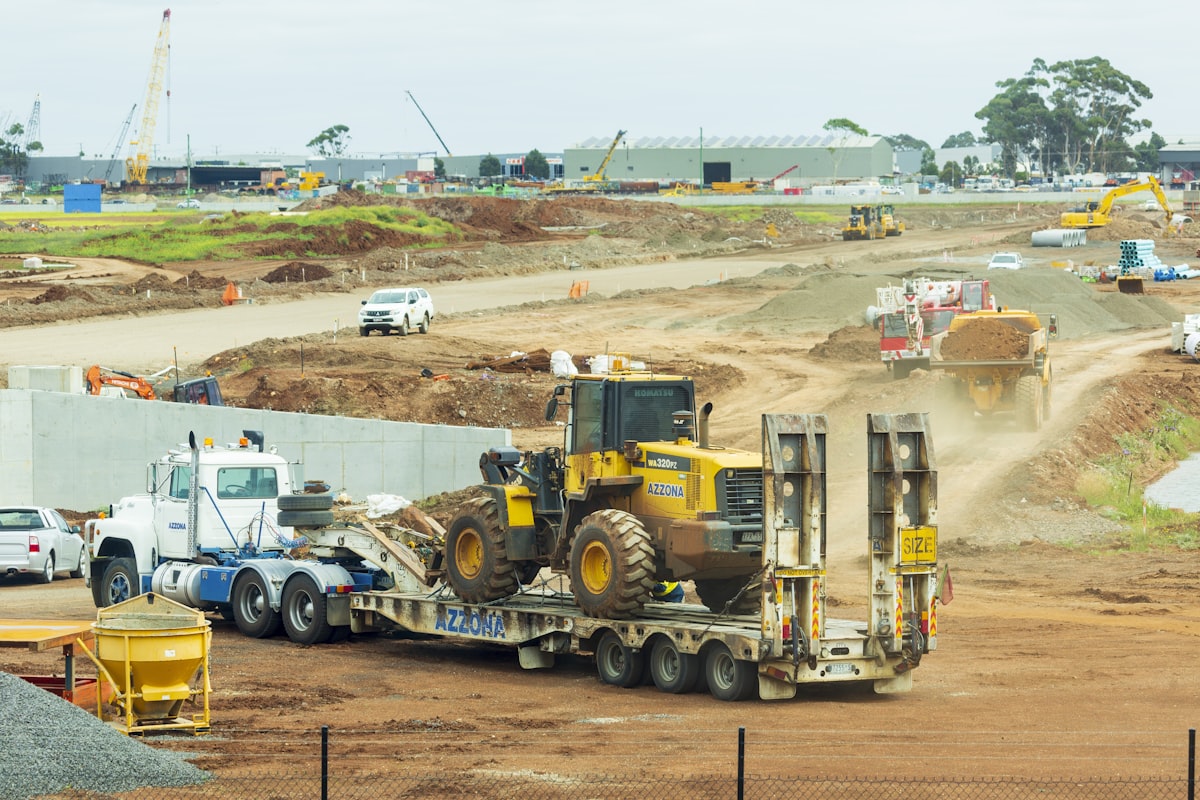
Caterpillar, John Deere, and Komatsu offer guaranteed trade-in programs for construction and mining equipment. A contractor financing a $2M excavator can lock in a guaranteed buyback price at year 5, then use that guarantee to secure better loan terms from their lender.
Ritchie Brothers, the world's largest equipment auctioneer, processes billions in equipment sales annually. Their auction data provides the pricing benchmarks that lenders, insurers, and manufacturers use to set guaranteed values.[15] Iron Planet (now part of Ritchie Brothers) extends this to online marketplaces.
Marine and shipping
Ship financing uses residual value structures to support the construction and acquisition of vessels worth $50-200M each. Clarksons Research handles over 30,000 vessel valuations per year, covering approximately $1.5 trillion in world fleet value,[16] and VesselsValue provides daily market values with historical data back to 1992.[17] Korean and Japanese shipyards have historically offered guaranteed buyback programs to incentivize new orders during market downturns.
Maritime assets share characteristics with GPU servers: high unit costs, technology-driven obsolescence (fuel efficiency standards, emissions regulations), and a global secondary market with specialized brokers. The financing structures that work for a Panamax bulk carrier also work for a rack of B200 servers, adapted for a faster depreciation cycle.

| Asset class | Valuation standard | RVI history | Secondary market |
|---|---|---|---|
| Aircraft | ISTAT monthly appraisals | 25+ years | Mature (GECAS, AerCap, lessors) |
| Vehicles | KBB, Manheim, ALG | 60+ years | Mature (millions of units/year) |
| Heavy equipment | Ritchie Brothers auction data | 40+ years | Mature ($5B+ annual auction volume) |
| Marine | VesselsValue, Clarksons | 20+ years | Mature (global broker network) |
| GPU servers | No standard index | Emerging (2023-present) | Growing (brokers, ITADs) |
Why technology RVI failed before
Residual value insurance for technology equipment has been tried before. The best-documented case is Lloyd's of London's “J” policies, a form of RVI written on IBM mainframe leases in the 1970s. The product worked for five years, then produced the largest single loss in Lloyd's history at the time.
Lloyd's “J” policies
In 1974, a Texas leasing entrepreneur named Chris Christopher met with Lloyd's broker Peter Nottage and proposed a policy to address a specific financing problem. Banks would not finance IBM mainframe leases longer than four years because IBM might release a new model that made the current one obsolete, eroding the collateral value.[18]
Under the proposed policy, if a lessee canceled a computer lease after the non-cancellable period, Lloyd's would pay the lessor any remaining balance owed to the bank. Lloyd's was insuring against technological obsolescence: guaranteeing the residual value of IBM System/370 mainframes if they were returned early. The product became known as the “J” policy in industry parlance.[18]
Rapid adoption
The insurance market embraced the product. By the late 1970s, 57 Lloyd's syndicates and 17 British insurance companies were writing J policies. They collectively issued over 14,000 policies covering more than $1 billion in insured equipment value.[19]
Itel Corporation, a San Francisco-based computer lessor, became the single largest user, accounting for roughly 48% of all J policies written. Citicorp, Chase Manhattan, and Bank of America also obtained coverage for their IBM mainframe lease portfolios.[19] One leasing industry veteran later called it “a brilliant piece of financial jiggery-pokery” that supercharged the computer leasing business by making lenders comfortable with residual risk.[18]
The IBM 4300 shock
In 1979, IBM released the 4300 series mainframe. It delivered higher performance at roughly 30% lower leasing cost than the prior generation. Organizations leasing older IBM System/370 mainframes canceled their leases to upgrade, triggering exactly the scenario Lloyd's had insured against: a massive wave of lease cancellations.[19]
Itel alone anticipated over $100 million in claims.[20] Federal Leasing Inc. of McLean, Virginia filed suit against Lloyd's in June 1979 after underwriters balked at prompt payment, seeking over $500 million in damages including punitive damages for bad faith.[21]
Scale of losses
Time magazine reported in July 1979 that Lloyd's expected payouts to reach $225 million, making it “the biggest loss in its 291-year history” at that point. For context, Hurricane Betsy (1965) had been Lloyd's previous record loss at roughly $100 million.[19] By late 1979, around $30 million had been paid with $220 million in reserves set aside.
The final numbers were worse. Aggregate claims exceeded $450 million, wiping out over half of Lloyd's entire market profit for the year.[22] A 1985 Journal of Finance study confirmed it as the single largest catastrophic loss the market had ever faced.[23]
Itel's collapse
Itel had used Lloyd's J policies, taken out between 1975 and 1978, to finance its portfolio of IBM-compatible systems. After the 4300 announcement, customers walked away from older System/370 leases. By August 1980, Lloyd's had paid Itel only $8.4 million against $21.5 million in submitted claims.[24]
The slow payouts created a cash crisis. Itel sold ships, railcars, and an entire information services division to raise funds. The company filed for Chapter 11 bankruptcy in early 1981, a collapse attributed largely to the J policy meltdown and the rapid technology shifts that undercut its business model.[24]
What went wrong
Three structural problems made the losses inevitable:
- No secondary market data. Underwriters priced residual guarantees using manufacturer projections, not resale transaction data. When IBM released a dramatically cheaper product, their pricing models were wrong by orders of magnitude.[25]
- No domain specialization. Lloyd's syndicates underwrote technology residuals alongside marine, aviation, and casualty risks. Nobody on the underwriting side tracked IBM's product pipeline or understood technology depreciation cycles.[25]
- Insuring leases with no use case ladder. J policies guaranteed the remainder of a lease, not the resale value of the hardware. When a lessee canceled, Lloyd's owed the full outstanding balance regardless of what the equipment was still worth. Worse, IBM mainframes had no secondary use case. A System/370 displaced by the 4300 could not be repurposed for a different workload at a lower price point. It was either leased as a mainframe or it was worth nothing.
After 1979, Lloyd's stopped writing J policies entirely. One underwriter remarked that he doubted any broker would “ever try to place this policy again at Lloyd's.”[18] The episode became part of Lloyd's institutional lore, cited alongside asbestos and pollution claims as a factor in the market's near-collapse in the 1980s.[22]
How American Compute approaches these risks
The J policies show how badly residual value risk on technology can go wrong, and no structure removes that risk. This is how the American Compute program approaches the three problems above.
- Secondary market data. American Compute tracks realized resale prices for GPUs, servers, and networking, with over 600,000 pricing data points to date, and publishes a monthly benchmark in the Rack Report. Matcha Specialty Insurance Services uses that data when it sets floors.
- A single asset class. The team focuses on AI infrastructure, tracking NVIDIA product cycles, secondary market pricing, demand trends, and export controls.
- Resale value, not lease balances. The policy insures a floor under the resale value of scheduled equipment at covered trigger dates, not the remaining balance of a lease. If an eligible sale clears above the floor, the upside belongs to the owner. Floors also take into account how much secondary demand older hardware has, for example for inference and other workloads.
Floors, trigger dates, limits, and exclusions are still set policy by policy, which is why the policy wording matters more than any summary.

What an insured floor can mean for financing
IT equipment makes up 60% or more of data center capex.[26] Within that, the GPU servers alone account for roughly 80% of IT equipment cost.[27] That concentration makes the residual value question unavoidable for any lender in the space.
Without a policy, the residual is a guess, and whoever carries it has to be conservative about it. That conservatism shows up in the structure: the loan has to amortize down to a balance the lender is comfortable owning, lessors book conservative residuals, and a default partway through the term leaves the lender selling into whatever the secondary market is that quarter.
With a residual value insurance policy, the insured floor gives the lender or lessor a reference point for collateral valuation: the amount the policy insures at each covered trigger date, for eligible sales and subject to its terms. Depending on the transaction, the accounting treatment, and the coverage, that can support:
- Balloon structures: a final payment sized with the insured floor in mind, which can lower the monthly payment
- Booked residuals: a lessor may be able to support a higher booked residual, if its accounting treatment allows
- Recovery on default: if a borrower defaults mid-term, the policy can respond when the equipment is sold in an eligible sale at a covered trigger date, rather than leaving recovery entirely to that quarter's secondary market
A residual value policy does not change the price of the money, and it does not replace the lender's own credit decision. It changes the residual value risk being underwritten, which is often where a stalled deal is stuck.
Questions
- What is GPU residual value insurance?
- Coverage that puts an insured floor under the resale value of datacenter IT equipment, including GPU servers, networking, and storage. If scheduled equipment is sold in an eligible sale at a covered trigger date for less than the floor, the issuing insurer pays the shortfall, subject to the policy terms, limits, and exclusions. Sometimes called GPU residual value protection.
- What are the primary use cases for GPU residual value insurance?
- For lenders and lessors, three use cases come up most, and each depends on the transaction, the accounting treatment, and the coverage. Neocloud cash flow: a lender may size a balloon with the insured floor in mind and amortize the rest, which can lower the monthly payment. Equity or FMV leasing: an equity investor or lessor may be able to support a higher booked residual, if its accounting treatment allows. Credit enhancement: an insured floor that steps down through the term can support recovery if a borrower defaults mid-term, but only for an eligible sale at a covered trigger date.
- Who buys the policy?
- Policies are typically written to the lender or lessor carrying the residual exposure. If you are a borrower or operator, confirm your lender or lessor wants the coverage before requesting a quote, then introduce them to Matcha Specialty Insurance Services, which places the coverage.
- What equipment is covered?
- Coverage can extend to the IT equipment scheduled on the policy: GPU servers with NVIDIA B300, B200, H200, and H100 GPUs, networking switches, storage arrays, and related compute hardware. Facility infrastructure like batteries, generators, and cooling systems is excluded.
- Can I trigger disposal before the end of the policy?
- It depends on the policy. The policy sets the covered trigger dates, which can fall during the term rather than only at the end, and a sale qualifies only if it is tied to one of them. The insured floor differs by trigger date; earlier trigger dates typically carry a higher floor.
- Is this the same as a GPU residual value swap or put option?
- All three can create a price floor, but the structures differ. A residual value swap or put option is a bilateral over-the-counter derivative, so the protection depends on the counterparty's credit. A residual value insurance policy is issued by an insurer that is responsible for covered claims under the policy terms, and that insurer may be supported by reinsurance. Ask for the issuing insurer's rating and domicile, and whether it is admitted or nonadmitted in your state.
- Is this an accounting gimmick or true risk transfer?
- It is an insurance policy, not an informal promise: the issuing insurer takes on the residual value risk the policy describes and is responsible for covered claims, and it may cede part of that risk to reinsurers. Whether the policy supports an accounting or capital benefit, such as booking a higher residual or supporting a balloon, depends on your transaction, your accounting treatment, and the coverage. Confirm it with your auditors and advisors.
- What happens if the hardware sells above the insured floor?
- The upside is yours. The policy only responds when an eligible sale at a covered trigger date closes below the insured floor.
- How is the insured floor determined?
- Matcha Specialty Insurance Services sets each floor and premium within the underwriting authority delegated by the issuing insurer. It starts from the equipment's expected residual value at each trigger date, factoring in technology cycle position, demand trends, and secondary market data, including American Compute pricing data. Each policy is individually priced.
References
- “Buying or Selling GPUs in 2026: Prices, Tips & Rent vs Sell Analysis.” GPUnex Blog, 2026.
- “Secondary GPU Markets: Buying and Selling Used AI Hardware.” Introl Blog, 2025.
- “The Illusion of Stability: Unpacking H100 GPU Market Value Trends.” SiliconData.
- “Chipwrecked: Can Nvidia avoid the crash?” The Verge.
- “CoreWeave Closes $2.6 Billion Secured Debt Financing Facility.” CoreWeave Investor Relations, July 2025.
- “Lambda secures $500 mln loan with Nvidia chips as collateral.” Reuters, April 2024.
- “Nscale Signs a $1.4bn Delayed Draw Term Loan Backed by GPUs.” Nscale Press Release, February 2026.
- “Musk’s xAI raises $5 billion each in fresh debt and equity.” Reuters, July 2025.
- “EETC Resilience: Updated Historical Recoveries Through Pandemic and Beyond.” KBRA.
- ISTAT Appraisers Program. International Society of Transport Aircraft Trading.
- “Cape Town Convention and Protocol.” ICAO, 2001.
- “Aircraft Finance Insurance Consortium (AFIC).” Marsh, 2017.
- “ALG Automotive Insights & Outlook.” JD Power / ALG.
- Manheim Company Info. Cox Automotive.
- “RB Global generates $4.1 billion in 2024 GTV.” Digital Commerce 360, February 2025.
- “Ship Valuations.” Clarksons Research.
- “Value.” VesselsValue.
- Boothe, R. “A life in computer leasing: a personal view.” World Leasing Yearbook.
- “Fabled Lloyd’s Takes a Bath.” Time, July 16, 1979.
- Computer Weekly, June 1979.
- “$500 Million Suit Filed by McLean Firm.” Washington Post, June 12, 1979.
- “Lloyd’s of London.” Wikipedia.
- McConnell, J. & Schallheim, J. “Lease Cancellation Insurance.” Journal of Finance, 1985.
- “Itel Corporation.” Encyclopedia.com.
- Cipolla & Spilka. “What Went Wrong at Lloyd’s?” Best’s Review, November 1980.
- “AI Data Center Capex Breakdown and Future Outlook.” TrendForce.
- “Cost Breakdown: 32-Unit GB200 GPU Cluster.” Canopy Wave.
We bring together funders and borrowers. Investment-grade backstops make projects safer and quicker to fund.
Discuss a transaction →