Where Data Centers Are Built in the U.S. and Why
Ten states account for the majority of US data center capacity under construction: Virginia, Texas, Georgia, Pennsylvania, Ohio, Illinois, Arizona, Utah, Nevada, and Indiana. Each offers a unique combination of power, fiber, geography, tax policy, and timing.
What determines where data centers go
Site selection priorities [1]Hanwha Data Centers, "Power Availability: The New #1 in Data Center Site Selection" (2025)https://www.hanwhadatacenters.com/blog/power-availability-the-new-1-in-data-center-site-selection/
Power
Power availability has become the top site selection priority as AI training clusters pushed demand to 50-200 MW per facility. [2]EIA, "Electricity data browser" (accessed April 2026)https://www.eia.gov/electricity/data/browser/
It's easy to look at the price of electricity and think that's the whole story. Electricity is one of the largest operating costs of a data center, typically 30-40% of total operating expenses, influenced by what powers the grid in each region. A 100 MW data center at $0.07/kWh spends roughly $61 million per year on power alone.
Average commercial electricity rates ($/kWh) [2]EIA, "Electricity data browser" (accessed April 2026)https://www.eia.gov/electricity/data/browser/
But rates alone do not determine time-to-value for new data center builds. Power availability has overtaken fiber connectivity as the top factor in site selection. The grid must have capacity to deliver the power so the data center can become operational quickly. [1]Hanwha Data Centers, "Power Availability: The New #1 in Data Center Site Selection" (2025)https://www.hanwhadatacenters.com/blog/power-availability-the-new-1-in-data-center-site-selection/
Operators who cannot wait are building their own power. On-site gas turbines can produce electricity at $0.03-0.05/kWh in regions with cheap gas, half the $0.06-0.10/kWh typical of metro grid power. Proximity to cheap gas matters: Marcellus Shale feeds PJM (the regional grid operator covering Virginia and Pennsylvania), the Permian Basin feeds ERCOT (Texas grid), and the Haynesville Shale feeds the Southeast.
Fiber connectivity
Data centers cluster around internet exchange points (IXPs), physical locations where networks connect and swap traffic directly. Proximity to an IXP reduces latency and enables "direct peering," where ISPs exchange traffic without paying a third party to carry it. The major US exchange hubs are in Virginia, New York, Chicago, Dallas, Los Angeles, and Miami.
Subsea cable landings also anchor markets. Virginia Beach hosts multiple transatlantic cables, including MAREA, a Microsoft/Meta-backed cable completed in 2017. The Oregon coast connects to transpacific routes. Miami and Jacksonville connect to Latin America and the Caribbean.
Major US internet exchange hubs and subsea cable landings [3]TeleGeography, "Submarine Cable Map" (accessed April 2026)https://www.submarinecablemap.com/
Tax incentives
States compete for data center investment through sales tax exemptions on equipment purchases, property tax abatements, and utility rate concessions. Virginia's data center sales tax exemption, enacted in 2009, costs the state an estimated $1.6 billion per year in forgone revenue. [4]VPAP, "Virginia data center tax exemption" (2025)https://www.vpap.org/ Georgia provided $474 million in data center tax exemptions in the fiscal year ending July 2025.
Virginia tax exemption: projected vs actual cost [4]VPAP, "Virginia data center tax exemption" (2025)https://www.vpap.org/
These numbers have triggered backlash: as of early 2026, Virginia, Georgia, Illinois, and Florida have all moved to repeal, suspend, or restrict data center tax breaks. Illinois suspended its data center incentives for two years effective July 2026. Florida eliminated its sales tax exemption for data centers under 100 MW in June 2025. [4]VPAP, "Virginia data center tax exemption" (2025)https://www.vpap.org/
Labor and land
A typical data center only creates 30-50 permanent jobs. [5]Science for Georgia, "Data Centers: Big Power, Small Jobs" (2025)https://scienceforgeorgia.org/knowledge-base1/data-centers-big-power-small-jobs/ The jobs-to-impact ratio is the central argument communities use to oppose new builds. Community opposition has blocked or delayed $64 billion in data center projects across 24 states.
But the construction phase is labor-intensive, and data center developers do need a local labor force when they build. A large campus employs 1,000-5,000 workers during the 18-36 month build, driving demand for electricians, ironworkers, and fiber splicers. Metro areas with deep talent pools, particularly for construction trades, have an advantage.
Land requirements also scale with power. A 100 MW campus typically needs 10-40 acres depending on density and whether on-site generation is included. Northern Virginia land in prime data center corridors has reached $4-6 million per acre. The spread across the top 10 states is enormous: entitled parcels (land with zoning and permits already approved) in Loudoun County cost 100x what raw land goes for in rural Indiana or West Texas.
Land cost per acre by state (avg) [6]CBRE, "North America Data Center Trends H2 2025" (2025)https://www.cbre.com/insights/books/north-america-data-center-trends-h2-2025
Natural disaster risk
After Hurricane Sandy knocked out data centers in lower Manhattan in 2012, the industry shifted away from basement-level facilities in urban flood zones. Site selection now screens for hurricane, earthquake, tornado, and flood risk. Insurance costs reflect geography directly, but regardless of insurance payouts, downtime is expensive to business.
Northern Virginia's low disaster risk is one reason it became the dominant market.
US natural disaster risk zones [7]FEMA, "National Risk Index" (accessed April 2026)https://hazards.fema.gov/nri/
What changed in the AI era
Unlike web applications, AI training workloads are latency-insensitive. They don't need to be near the end users (the model trains for weeks or months). Now, the biggest problem is where to get the power. [1]Hanwha Data Centers, "Power Availability: The New #1 in Data Center Site Selection" (2025)https://www.hanwhadatacenters.com/blog/power-availability-the-new-1-in-data-center-site-selection/Of 110 data center projects slated for 2025, 26% were delayed and another 10% quietly pushed back, mainly because of the power bottleneck.
This explains why Abilene, Texas (population 125,000, 180 miles from Dallas) is now home to OpenAI's Stargate data center. [8]CNBC, "OpenAI's first data center in $500 billion Stargate project is up and running in Texas" (2025)https://www.cnbc.com/2025/09/23/openai-first-data-center-in-500-billion-stargate-project-up-in-texas.html Texas is the only state with its own power grid, and it's deregulated, so it's easier to get power approved quickly.
Texas isn't the only hotspot. xAI launched its Colossus supercomputer in Memphis, Tennessee with 100,000 H100 GPUs powered by 35 on-site gas turbines at 422 MW capacity, operating initially without air quality permits. [9]CNBC, "Musk's xAI scores permit for gas-burning turbines to power Grok supercomputer in Memphis" (2025)https://www.cnbc.com/2025/07/03/musks-xai-gets-permit-for-turbines-to-power-supercomputer-in-memphis.html [10]Data Center Dynamics, "xAI doubles number of onsite gas turbines at Memphis data center" (2025)https://www.datacenterdynamics.com/en/news/xai-doubles-number-of-onsite-gas-turbines-at-memphis-data-center-in-violation-of-permit-limits/
Inference workloads will eventually pull in the other direction. Running a trained model for real-time user responses requires sub-50ms latency to the end user, which means proximity to population centers. As the industry shifts from training (build anywhere with power) to inference (build near users), the geographic distribution may reconsolidate around the metros that have both power and population.
The top 10 states
Virginia leads by installed base, but Texas leads for new builds.
Top 10 states by data center pipeline (facilities) [11]Aterio, "Data Centers in the United States" (accessed April 2026)https://www.aterio.io/insights/us-data-centers
Texas
How it started
Dallas became a data center market because it was already a telecom market. In 1962, Ross Perot founded Electronic Data Systems (EDS) in Dallas, offering outsourced data processing, essentially running other companies' workloads in EDS-managed facilities. After the 1984 AT&T breakup, Dallas sat at the intersection of several major long-haul fiber routes crossing the US. The Telecom Corridor in Richardson housed over 600 tech and telecom companies by 2000.
ERCOT: the advantage and the risk
Texas is the only state that runs its own grid. The Electric Reliability Council of Texas (ERCOT) manages power for 26 million customers across roughly 90% of the state. Texas intentionally kept its grid intrastate after the Federal Power Act of 1935 to stay outside the jurisdiction of what is now the Federal Energy Regulatory Commission (FERC).
Texas deregulated its electricity market in 1999. Data centers can negotiate directly with retail electric providers or sign long-term power purchase agreements (PPAs), contracts that lock in a fixed electricity price from a specific generator, with wind and solar farms. Rates have historically run $0.04-0.07/kWh for large industrial users, among the lowest in the country.
There is a risk to having a standalone grid. In February 2021, Winter Storm Uri brought sub-zero temperatures to parts of the state. Natural gas wellheads froze. Roughly 52,000 MW of generation, about half the grid's winter capacity, went offline. Because ERCOT was isolated from the Eastern and Western Interconnections, no neighboring grid could send backup power. Most data centers in Texas survived on diesel generators, although some nearly exhausted fuel as icy roads disrupted deliveries.
ERCOT has a large amount of renewable energy. Texas leads the US in wind power with roughly 40,000 MW of installed capacity and was the top state for new solar installations in 2023.
The grid risk is accounted for. Data center operators plan for it with extended fuel contracts and on-site power generation. [12]Data Center Knowledge, "Could Texas Overtake Northern Virginia as the Data Center Capital?" (2025)https://www.datacenterknowledge.com/build-design/could-texas-overtake-northern-virginia-as-the-data-center-capital-
Four markets in one state
| Market | Differentiator | Power provider |
|---|---|---|
| Dallas-Fort Worth | Fiber density, carrier hotels, largest Texas market (~900+ MW operational) | ERCOT (Oncor distribution) |
| San Antonio | Municipal utility (CPS Energy) offers fixed-rate contracts outside ERCOT's deregulated market. Microsoft campus since ~2010 | CPS Energy |
| Austin | Tech HQ density (Dell, Oracle, Tesla). Municipal utility (Austin Energy) | Austin Energy |
| Houston | Energy sector demand. Subsea cables to Latin America via Gulf Coast landings | ERCOT (CenterPoint) |
Two Texas cities operate municipal utilities that sit outside ERCOT's market (but are still part of their grid). CPS Energy in San Antonio offers attractive long-term fixed-rate power contracts, which is why Microsoft built one of its largest Azure campuses there.
The AI surge and what comes next
ERCOT: queue vs installed capacity [13]ERCOT, "System Planning and Weatherization Update" (December 2025)https://www.ercot.com/files/docs/2025/12/02/16.2-System-Planning-and-Weatherization-Update_Revised.pdf
ERCOT's large-load interconnection queue reached 226 GW by November 2025, more than double ERCOT's entire installed generation capacity of roughly 105 GW. Over 70% of requests are from data centers. [14]Latitude Media, "ERCOT's large load queue has nearly quadrupled in a single year" (2025)https://www.latitudemedia.com/news/ercots-large-load-queue-has-nearly-quadrupled-in-a-single-year/ [13]ERCOT, "System Planning and Weatherization Update" (December 2025)https://www.ercot.com/files/docs/2025/12/02/16.2-System-Planning-and-Weatherization-Update_Revised.pdf [15]Utility Dive, "ERCOT's large load queue jumped almost 300% last year" (2025)https://www.utilitydive.com/news/ercots-large-load-queue-jumped-almost-300-last-year-official/808820/ Texas voters approved the $10 billion Texas Energy Fund in November 2023, providing low-interest loans for new natural gas generation to keep pace.
Virginia
How it started
Northern Virginia's dominance traces to a few things that happened within miles of each other in the early 1990s.
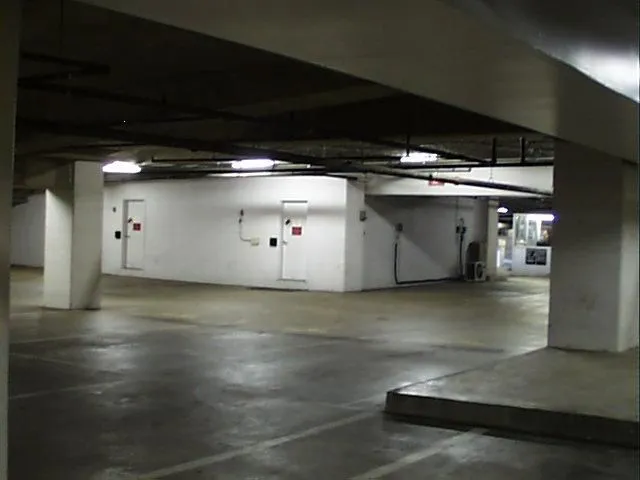
MAE-East, one of the internet's original exchange points, opened in a parking garage in 1992. It was one of the first places where commercial internet service providers (ISPs) could interconnect and swap traffic directly rather than routing through government-funded networks.
Internet messaging service AOL was headquartered nearby in Dulles, and at its peak had 30 million subscribers whose traffic needed servers nearby. The corridor of fiber built for AOL became known as “Data Center Alley.” There was a compounding effect: more fiber attracted more tenants, more tenants attracted more fiber.
The late 1990s brought the first data center construction wave leading up to the dot-com bust. Exodus Communications built 46 internet data centers before filing for bankruptcy in September 2001. AboveNet, PSINet, and Genuity followed into bankruptcy in 2001-2002.
The bust cleared the field for the companies that would define the industry.Equinix was founded in 1998 on the principle of carrier neutrality, meaning any telecommunications carrier or ISP could connect in its facilities. [16]Equinix, "Company History" (accessed April 2026)https://www.equinix.com/about Digital Realty went public as the first data center REIT (real estate investment trust) in 2004. In August 2006, Amazon launched its cloud offering from data centers in Ashburn, Virginia, what would become AWS's US-East-1 region.
US data center history
Why Virginia works
| Factor | Virginia's advantage |
|---|---|
| Fiber | Highest peering density in the world. Virginia Beach subsea cable landings (MAREA, BRUSA) for transatlantic connectivity |
| Federal proximity | Adjacent to the Pentagon, CIA, NSA (Fort Meade), and dozens of federal agencies. AWS GovCloud serves classified workloads from here |
| Tax incentives | Sales and use tax exemption on data center equipment (enacted 2009). Saves hundreds of millions per large deployment |
| Grid | PJM Interconnection, the largest US regional transmission organization, covers Virginia. Capacity market ensures generation investment |
| Disaster risk | Low: inland from hurricanes, no significant earthquake or tornado risk |
Over 600 data centers now operate in Virginia. The state holds an estimated 13% of the world's computing capacity. Amazon announced $35 billion in Virginia data center investment in 2023. [17]Amazon, "$35 billion Virginia data center investment" (2023)https://www.aboutamazon.com/news/aws/aws-virginia-data-center-investment
Where Virginia is hitting limits
One power provider, Dominion Energy, serves roughly 450 data centers. The constraint is not generation but transmission: the wires and substations to deliver it. In 2022, Dominion and PJM (the regional grid operator) imposed effective moratoriums on new large power connections in Northern Virginia. [18]Data Center Dynamics, "Dominion Energy admits it can't meet data center power demands in Virginia" (2025)https://www.datacenterdynamics.com/en/news/dominion-energy-admits-it-cant-meet-data-center-power-demands-in-virginia/ New projects now face 7-year wait times for power delivery, up from 12-18 months historically. [19]Bloomberg, "Data Centers Face Seven-Year Wait for Power Hookups in Virginia" (2024)https://www.bloomberg.com/news/articles/2024-08-29/data-centers-face-seven-year-wait-for-power-hookups-in-virginia
Community pushback has also materialized. Loudoun County passed zoning rules restricting data center expansion into the county's western rural areas. A $24.7 billion data center campus in Virginia remains delayed by three lawsuits. In response, development is spilling into adjacent counties and southward toward Richmond and Virginia Beach.
Northern Virginia: saturated core, outward expansion [18]Data Center Dynamics, "Dominion Energy admits it can't meet data center power demands in Virginia" (2025)https://www.datacenterdynamics.com/en/news/dominion-energy-admits-it-cant-meet-data-center-power-demands-in-virginia/
Georgia
How it started
Atlanta became a data center market because it sits at the crossroads of every major north-south and east-west fiber route in the Southeastern US.
Why Georgia works
Georgia Power, a subsidiary of Southern Company, operates a diverse generation fleet including the only new nuclear reactors built in the US in over 30 years.
Plant Vogtle Units 3 and 4, each providing approximately 1,100 MW of carbon-free baseload power, reached commercial operation in 2023 and 2024 respectively. The project ran massively over budget (final cost approximately $30-35 billion versus an original $14 billion estimate), but the result is 2,200 MW of 24/7 carbon-free generation.
Nuclear generating capacity by state (GW) [2]EIA, "Electricity data browser" (accessed April 2026)https://www.eia.gov/electricity/data/browser/
Georgia enacted data center tax exemptions in 2018, exempting qualifying facilities from state sales tax on equipment purchases. It worked. QTS built its flagship campus in Suwanee, Georgia. [20]Blackstone, "QTS Realty Trust acquisition" (2021)https://www.blackstone.com/news/press/blackstone-to-acquire-qts-realty-trust/ Google invested over $1.2 billion in Georgia data centers. Meta announced a campus in Newton County with an initial investment exceeding $750 million.
Where Georgia hits limits
Georgia Power's data center pipeline has reached roughly 40 GW of requested load, exceeding the state's entire existing grid capacity of 38 GW. In response, regulators approved a massive power grid expansion, including five new natural gas plants, at an estimated long-term cost of $50-60 billion. [21]Georgia Recorder, "Georgia regulators approve massive power grid expansion to serve data centers" (2025)https://georgiarecorder.com/2025/12/19/georgia-regulators-approve-massive-power-grid-expansion-to-serve-data-centers/
Water is also a distinct concern. Georgia's decades-long "Tri-State Water Wars" with Alabama and Florida over the Apalachicola-Chattahoochee-Flint river basin add political sensitivity to any large new water consumer. Several operators have committed to air-cooled or hybrid cooling systems in Georgia to reduce water consumption.
The next seven
Pennsylvania: nuclear and the NoVA overflow
Pennsylvania is the second-largest nuclear state in the US, with nine reactors across five plants providing roughly 32% of in-state generation. Microsoft signed a 20-year PPA with Constellation Energy to restart Three Mile Island Unit 1 (835 MW, renamed Crane Clean Energy Center) for $1.6 billion, targeting 2027. [22]Constellation Energy, "Crane Clean Energy Center" (2025)https://www.constellationenergy.com/newsroom/2025/09/one-year-later-crane-clean-energy-center-still-in-the-spotlight-and-ahead-of-schedule.html Amazon purchased a data center campus adjacent to Talen Energy's Susquehanna nuclear plant for $650 million, though FERC denied the behind-the-meter arrangement (drawing power directly from the plant, bypassing the public grid), setting a precedent for how data centers can access nuclear generation. [23]ANS Nuclear Newswire, "FERC denies Talen-Amazon agreement, again" (2025)https://www.ans.org/news/2025-04-16/article-6937/ferc-denies-talen-amazon-agreementagain/ [24]Utility Dive, "Talen to sell Amazon 1.9 GW from Susquehanna nuclear plant" (2025)https://www.utilitydive.com/news/talen-amazon-aws-susquehanna-nuclear-data-centert/750440/
The Lehigh Valley corridor (80-100 miles from Manhattan) gives financial services firms low-latency connectivity to Wall Street at a fraction of New York's power costs.
Ohio: the Intel halo and NoVA overflow
Intel's $20 billion chip fab in New Albany catalyzed infrastructure buildout: American Electric Power (AEP) transmission upgrades, water systems, and a supplier ecosystem that benefits data center operators. AWS announced a $7.8 billion investment in Ohio data centers, Google committed $1.7 billion, and Meta announced an $800+ million facility.
Ohio enacted a data center sales tax exemption in 2013 for facilities investing at least $100 million, but the utility commission ruled that data centers must absorb grid investment costs rather than passing them to residential ratepayers.
Illinois: the financial exchange hub
Chicago's data center market was built around trading infrastructure, not cloud. High-frequency trading firms need microsecond-level latency to the CME Group, Cboe, and the Options Clearing Corporation, creating a dense interconnection fabric. 350 East Cermak, operated by Digital Realty, is one of the most interconnected buildings in the world.
Illinois is the top US nuclear state by capacity: 11 reactors producing roughly 12,400 MW across six Constellation Energy plants, about half of in-state generation. In 2021, Illinois provided roughly $700 million in subsidies to keep the Byron and Dresden plants (~4,000 MW combined) from closing, and that baseload now anchors hyperscale development.
Arizona: dry heat, wet problem
Palo Verde Nuclear Generating Station, west of Phoenix, is the largest nuclear plant in the US at 3,937 MW across three units. Arizona also enacted a 10-year equipment tax exemption in 2013. This helped attract large campuses from Meta, Microsoft, and QTS.
Phoenix's low humidity (often below 20% relative humidity) makes evaporative cooling remarkably efficient. But evaporative cooling in a desert consumes millions of gallons annually. The Colorado River basin is under chronic stress, and a proposed $14 billion data center complex was withdrawn in May 2024 after community opposition centered on water. Newer facilities are shifting to air-cooled or closed-loop liquid cooling, trading higher electricity consumption for lower water use.
Utah: the NSA anchor
The NSA's Utah Data Center in Bluffdale was completed in 2014 for $1.5 billion. Salt Lake City's elevation (4,300 ft) and arid climate provide natural cooling, and the state sits on major east-west fiber routes connecting the West Coast. Meta announced a data center in Eagle Mountain, Utah with an initial investment of $750 million. The state's historical reliance on coal power still creates an environmental, social, and governance (ESG) challenge for hyperscalers with clean energy commitments.
Nevada: California proximity, no California costs
Reno is 13 miles from California, offering West Coast connectivity at $0.07-0.08/kWh versus California's $0.18-0.24/kWh, with no corporate, personal, or franchise income tax and data center tax abatements enacted since 2015.
Indiana: fastest from zero to top ten
Indiana went from a negligible data center market to a top-10 state in only two years. AWS broke ground on an $11 billion campus in 2024. [25]Data Center Dynamics, "AWS breaks ground on $11bn data center campus in Indiana" (2024)https://www.datacenterdynamics.com/en/news/aws-breaks-ground-on-11bn-data-center-campus-in-indiana/ Then Google committed $2 billion, Meta announced an $800 million facility, and Microsoft announced multiple campuses.
There are a few factors at play: cheap power ($0.06-0.08/kWh), central location, and available land. Indiana spans both PJM and MISO (Midcontinent Independent System Operator) grids, giving developers more capacity to choose from, and enacted data center sales tax exemptions in 2019. Retired coal plants have also freed up transmission capacity and substation infrastructure, often with exactly the high-voltage grid connection a data center needs.
References
- Hanwha Data Centers, "Power Availability: The New #1 in Data Center Site Selection" (2025)
- EIA, "Electricity data browser" (accessed April 2026)
- TeleGeography, "Submarine Cable Map" (accessed April 2026)
- VPAP, "Virginia data center tax exemption" (2025)
- Science for Georgia, "Data Centers: Big Power, Small Jobs" (2025)
- CBRE, "North America Data Center Trends H2 2025" (2025)
- FEMA, "National Risk Index" (accessed April 2026)
- CNBC, "OpenAI's first data center in $500 billion Stargate project is up and running in Texas" (2025)
- CNBC, "Musk's xAI scores permit for gas-burning turbines to power Grok supercomputer in Memphis" (2025)
- Data Center Dynamics, "xAI doubles number of onsite gas turbines at Memphis data center" (2025)
- Aterio, "Data Centers in the United States" (accessed April 2026)
- Data Center Knowledge, "Could Texas Overtake Northern Virginia as the Data Center Capital?" (2025)
- ERCOT, "System Planning and Weatherization Update" (December 2025)
- Latitude Media, "ERCOT's large load queue has nearly quadrupled in a single year" (2025)
- Utility Dive, "ERCOT's large load queue jumped almost 300% last year" (2025)
- Equinix, "Company History" (accessed April 2026)
- Amazon, "$35 billion Virginia data center investment" (2023)
- Data Center Dynamics, "Dominion Energy admits it can't meet data center power demands in Virginia" (2025)
- Bloomberg, "Data Centers Face Seven-Year Wait for Power Hookups in Virginia" (2024)
- Blackstone, "QTS Realty Trust acquisition" (2021)
- Georgia Recorder, "Georgia regulators approve massive power grid expansion to serve data centers" (2025)
- Constellation Energy, "Crane Clean Energy Center" (2025)
- ANS Nuclear Newswire, "FERC denies Talen-Amazon agreement, again" (2025)
- Utility Dive, "Talen to sell Amazon 1.9 GW from Susquehanna nuclear plant" (2025)
- Data Center Dynamics, "AWS breaks ground on $11bn data center campus in Indiana" (2024)
Frequently Asked Questions
Why is Northern Virginia the largest data center market in the world?
Northern Virginia became dominant through a self-reinforcing cycle that started in the early 1990s. MAE-East, one of the first internet exchange points, opened in Tysons Corner in 1992. AOL headquartered nearby in Dulles, driving fiber buildout along the Route 28 corridor. When AWS chose Ashburn for its first cloud region (US-East-1) in 2006, the network effect compounded. Proximity to the federal government, Virginia's data center sales tax exemption (enacted 2009), and low natural disaster risk sealed the advantage. Amazon has invested $35 billion in Virginia data centers.
What is ERCOT and why does it matter for Texas data centers?
ERCOT (Electric Reliability Council of Texas) manages power for 26 million Texas customers on a grid intentionally kept separate from the rest of the US to avoid federal regulation. Texas deregulated its electricity market in 1999, letting data centers negotiate directly with providers and sign PPAs with renewable generators at $0.04-0.07/kWh. The risk: ERCOT's isolation means no neighboring grid can send backup power during failures. Winter Storm Uri in February 2021 knocked roughly 52,000 MW offline, about half the grid's winter capacity. Most data centers survived on diesel generators, though some nearly ran out of fuel as icy roads disrupted deliveries.
Which US states have the most data centers under construction?
As of early 2026, the top 10 states by data center pipeline are Virginia, Texas, Georgia, Pennsylvania, Ohio, Illinois, Arizona, Utah, Nevada, and Indiana. Virginia leads by installed base but faces power constraints with 7-year wait times for grid connections. Texas is positioned to lead in new construction, driven by ERCOT's deregulated market and abundant wind and solar. Indiana went from near-zero to top-10 in roughly two years, with AWS breaking ground on an $11 billion campus in 2024.
Why are data centers moving to rural areas like Abilene, Texas?
AI training clusters consume 50-200 MW but do not need proximity to end users since models train for weeks without real-time interaction. The site selection question shifted from "where are my customers" to "where can I get 200 MW in 12 months." Abilene, population 125,000 and 180 miles from Dallas, is now home to OpenAI's Stargate data center because it has available transmission capacity from nearby wind farms, cheap land, and fast permitting. Power availability has overtaken fiber connectivity as the top factor in data center site selection.
What role does nuclear power play in data center site selection?
Nuclear provides 24/7 carbon-free baseload power at over 93% capacity factor, exactly what AI workloads need. Microsoft signed a 20-year PPA with Constellation Energy to restart Three Mile Island Unit 1 (835 MW) in Pennsylvania. Amazon purchased a data center campus adjacent to the Susquehanna nuclear plant for $650 million. Illinois has 11 operating reactors, Pennsylvania has 9, and Georgia completed Plant Vogtle Units 3 and 4 (2,200 MW combined) in 2023-2024. States with nuclear fleets have a structural advantage for AI data center development.
We source vetted data center compute deals for funders, with added downside protection for credit, collateral, and operational risks.
Discuss a transaction →